

Spiritual Philosophy and Science
“Scientists will find themselves compelled to announce that there is what they may call an ether, and this ether, as will be discovered scientifically, appears to be imbued with what you know as intelligence.”
— Abu
The relationship between science and spiritual philosophy raises complex questions about life after the death of the physical body and other forms of life that may share our Earth and the universe.
Many researchers, including well-known figures in science, medicine and philosophy, have taken a deep interest in psychic and spiritual studies, seeking evidence of life after death.
Here, The Abu Trust introduces some of these researchers and recommends their books. Their work explores subjects including the ether, spiritual and psychic phenomena, the paranormal, subatomic and quantum physics, space and time.

Sir William Crookes, F.R.S.
1832–1919 · Born in London
In 1870, Sir William Crookes announced his intention to investigate psychic phenomena. Already a distinguished physicist and chemist, he approached the subject as a field for experimental research.
According to the account supplied by The Abu Trust, Crookes and Alfred Russel Wallace were introduced to spiritualist phenomena through the English medium Mrs Mary Marshall. Crookes’s interest was also encouraged by J. J. Morse. Before accepting a spiritual explanation, he wanted to explore other possibilities and work with a medium capable of producing a wide range of phenomena.
Crookes worked with Daniel Dunglas Home, whose mediumship had brought him into contact with British and foreign nobility. From his experiments, Crookes concluded that there was a force connected with human organisation, which he described as a psychic force. His investigations with Florence Cook also convinced him of materialisation. These were Crookes’s conclusions about the phenomena he investigated.
Satisfied that the phenomena were genuine, Crookes published his findings. His spiritualist investigations met with criticism and hostility from some scientific colleagues. The Abu Trust regards his work as an important contribution to the study of survival after death.
Born in London in 1832, Crookes developed an early interest in laboratory work. He studied at the Royal College of Chemistry under August Wilhelm von Hofmann and began publishing original research while still a young man.
His research ranged from photography to practical problems such as cattle plague. In 1861, he discovered thallium. His investigations also led to the Crookes radiometer and work with vacuum discharge tubes, through which he explored the properties of cathode rays.
Crookes also developed protective glass intended to reduce harmful radiation reaching the eyes. His vacuum-tube work helped provide the experimental equipment used in the subsequent discovery of X-rays by Wilhelm Röntgen in 1895.
Selected honours and appointments
- Fellow of the Royal Society, elected in 1863.
- Foreign Secretary of the Royal Society, 1908–1912.
- President of the Royal Society, 1913–1915.
- Bakerian Lecturer in 1878, 1879 and 1883.
Books and further reading
- Researches in the Phenomena of Spiritualism — William Crookes.
- Experimental Investigation of a New Force — William Crookes.
- Crookes and the Spirit World — Dr R. G. Medhurst.

Sir Oliver Lodge, F.R.S.
1851–1940 · Born in Staffordshire
Sir Oliver Lodge was a pioneer of wireless communication whose interests also extended to psychical research and the relationship between science and spiritual philosophy.
He became Professor of Physics at University College, Liverpool, in 1881. In 1900, he became the first Principal of the University of Birmingham, a position he held for nearly twenty years. He was knighted in 1902.
His son Raymond was killed during the First World War in 1915. Lodge believed that he subsequently received messages from Raymond, which he recorded in his book Raymond. He went on to write and publish many books about survival after death and the connection between mind and body.
His views on matter, mind and the ether
Lodge’s discussion of mind and body begins with the idea that matter is inert: it does not change its state of motion without forces acting upon it. A spinning body continues to spin, and an object in motion continues in motion unless acted upon by an external force. He related this to the law of inertia, applying it to material atoms whether they formed part of an engine, a clockwork mechanism or a living body.
He associated changes in material behaviour with forces producing acceleration or retardation, and discussed the equal and opposite reactions described by the third law of motion. In his account, energy reveals itself through its effects on material bodies, while space plays a fundamental role in the physical universe.
Lodge argued that our reliance on the senses can encourage philosophical materialism. We observe effects upon matter, but he did not believe that this justified doubting the existence of everything beyond direct sensory perception. For him, the physical universe did not consist of matter alone.
His psychical enquiries, following the lines of the Society for Psychical Research, included experimental telepathy, automatic writing and trance speech. He encountered criticism from both scientific and religious orthodoxy, but maintained that the business of science was investigation. Where a fact or theory had a prima facie case, he considered further investigation necessary to examine and extend it.
His aim was a better understanding of human faculties, personality and destiny. He believed that a fuller understanding of humanity could also influence ideas about divinity, and regarded the ether of space as a connecting link between the material and spiritual worlds.
In the passage dated 1933 in the supplied text, Lodge describes a spiritual world throughout space as a fundamental reality. He regards its manifestation through material organisms as a temporary episode within evolutionary development, and argues that our real existence does not depend upon a material organism.
In this view, we are immortal spirits temporarily associated with matter. Lodge suggests that bodily restriction and isolation help us become individualised and acquire a lasting personality, capable of adapting to new surroundings. He describes the ether of space as our spiritual home.
In a further passage, Lodge states his belief that he had communicated with minds whose physical bodies had died. He proposes that discarnate spirits might have substantial bodies made of ether rather than ordinary matter, and that communication would require the use of some material form.
He calls for careful examination of apparently incredible evidence and acknowledges that there may be areas of knowledge for which we do not yet have the key. How discarnate intelligence might use the ether, he leaves as a problem for future investigation.
Honours and appointments
Lodge’s distinctions included Fellowship of the Royal Society, its Rumford Medal, and the Royal Society of Arts’ Albert Medal for his pioneering work in wireless telegraphy. He served as President of the Röntgen Society, the Physical Society and the British Association.
His academic qualifications and honorary degrees included a D.Sc. from London; honorary science doctorates from Oxford, Cambridge, Liverpool, Manchester, Leeds, Sheffield, Adelaide and Toronto; honorary law doctorates from St Andrews, Aberdeen, Glasgow and Edinburgh; and an honorary M.A. from Birmingham.
The supplied credentials also list honorary membership of the Institution of Electrical Engineers and the Manchester Literary and Philosophical Society, together with corresponding memberships of learned societies in Philadelphia, Bologna and Rotterdam.
Books by Sir Oliver Lodge
- My Philosophy
- Ether and Reality
- Phantom Walls
- The Survival of Man
- Raymond
- Raymond Returns
- The Reality of a Spiritual World
- Atoms and Rays
- Energy
- Advancing Science
- Modern Scientific Ideas
- Psychic Science
- The Outline of Science
- Why I Believe in Personal Immortality
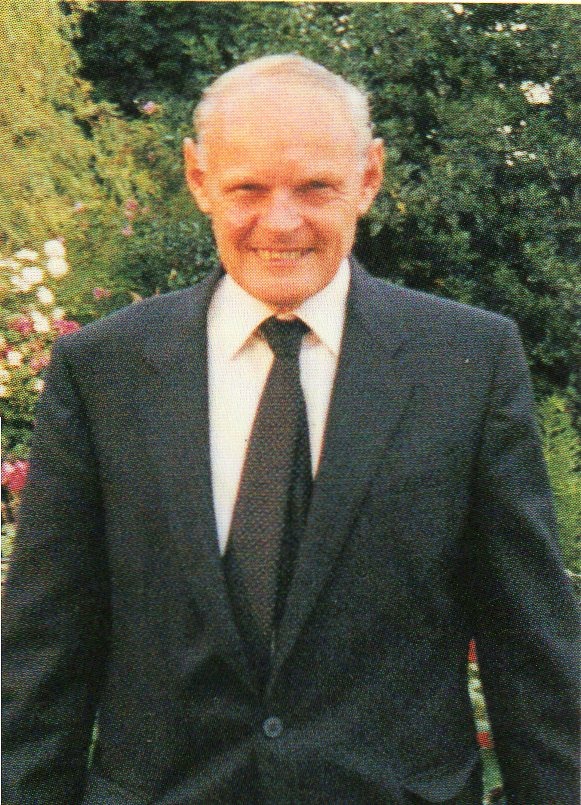
Ronald D. Pearson, B.Sc.
Born in 1925
Ronald D. Pearson began his professional career by inventing an engine he called a “gas wave turbine”, which he subsequently developed to the detonation stage. He became a research officer at NGTE, working on jet engines, and spent the latter half of his career lecturing in mechanical engineering at Manchester, Liverpool and Bath, specialising in thermodynamics and fluid mechanics.
His interest in cosmology developed after reading about the Big Bang. Drawing on his background in Newtonian physics, thermodynamics and fluid mechanics, he sought a different approach to questions about the origin and nature of the universe.
The connection with spirituality arose as a consequence of his proposed theory. Pearson sought an explanation of wave–particle duality that could also bring what is commonly described as the paranormal within the scope of physics. He emphasised that theories must be tested against experiments and observations: a theory alone cannot establish its own truth.
His questions about the Big Bang
Pearson began this study in 1984, questioning the basic principles of Big Bang cosmology. He challenged the proposed role of negative vacuum pressure and what he regarded as problems with the cosmological constant. In his account, the predicted effect was fifty orders of magnitude greater than astronomical observations would allow.
He asked whether an alternative explanation was possible. At the time, he described himself as a sceptic with no intention of supporting survival after death; he said that this possibility emerged as a consequence of the solution he developed.
A proposed sub-quantum model
Pearson argued that the modelling of attractive forces, such as gravitation and the strong nuclear force, required a different treatment of the conservation of momentum. He proposed a complementary substance at a sub-quantum level, whose response to applied forces would be opposite to that of ordinary matter. In his model, primary particles of negative energy complemented primary particles of positive energy in a balanced mixture.
He considered this background medium incompatible with curved spacetime, the basis of general relativity. His approach also addressed what he saw as the difficulty of reconciling relativity, which describes gravitation on large scales, with quantum theory.
Pearson proposed extending Newtonian physics by including the equivalent of kinetic energy in an object’s inertial mass. He described the sub-quantum medium as a compressible fluid, becoming more compressed near a massive object such as a planet or star. He claimed that, when expressed mathematically, these features reproduced many experimentally testable predictions of special and general relativity while remaining compatible with quantum theory.
An alternative explanation of creation and expansion
In Pearson’s account, quantum waves arise from a self-organising structure at the sub-quantum level. He proposed that the complementary primary particles could multiply through collisions while satisfying the conservation of energy and momentum. This was his proposed alternative to the Big Bang as the primary creative process.
He described continuous net creation throughout space as a cause of accelerating cosmic expansion. He linked this proposal to the observations of accelerating expansion reported in 1998, which he regarded as consistent with his approach.
Consciousness and the “super mind of space”
Pearson envisaged a structure extending throughout space, with features resembling the neural networks of the brain and with its own energy supply. He described interconnected switches capable of generating waves. Although on a much finer scale than the physical brain, he speculated that such a structure might develop intelligence and, ultimately, a primary consciousness.
In his proposal, this consciousness could control waves and use them to create matter. Focused waves would produce density peaks that appeared to us as particles, providing his suggested explanation of wave–particle duality.
He further speculated that a “super mind of space” could create several matter systems occupying the same space but tuned to different quantum-wave frequencies. Individual “sub-minds”, as fragments of this larger structure, would tune into one matter system at a time. Their apparent reality would depend on the system to which they were tuned.
When a physical system wore out, Pearson proposed that the sub-mind could tune into another matter system and continue to exist. On this view, the brain would act as an interface through which the mind directed the body. He therefore argued that the end of physical brain function need not necessarily mean the end of consciousness.
Pearson presented this as a combination of mathematical argument and speculation, linking his account of survival with a proposed quantum-wave theory of gravity. He believed that his approach could connect gravitation with other forces and allow paranormal phenomena to be considered within physics.
The ether and the reception of his ideas
Pearson did not describe his proposal as a form of dualism. He regarded it as arising from physics itself, and welcomed criticism that engaged with its reasoning and experimental implications. He hoped that, if the theory or an equivalent approach became scientifically accepted, evidence for survival could be considered a fundamental part of physics.
His revised Newtonian approach required an all-pervading medium connecting all things: an ether. He believed that its proposed structure could behave like a neural network and develop consciousness. In this interpretation, mind would form part of the ether’s structure and might survive physical death. He also envisaged a universe deliberately created by a larger consciousness in which biological systems could evolve.
Pearson maintained that his model allowed different matter systems to coexist and could account for phenomena commonly described as paranormal. He reported resistance to his ideas from universities and argued that their conflict with Einstein’s framework was a central reason for their rejection. These are presented here as Pearson’s arguments and interpretation of his work.
Publications and conference papers
The supplied account reports that Quantum Gravitation and the Structured Ether was published following a Sir Isaac Newton conference in St Petersburg in 1993. It also describes a presentation at an earlier convention in 1991 and a proposal by Professor Philip Kanarev that Pearson’s theory be considered for university teaching.
It further reports that Consciousness as a Sub-Quantum Phenomenon was peer-refereed and published in 1997 by the Centre for Frontier Sciences at Temple University, USA.
Books and further reading
- Intelligence Behind the Universe
- Origin of Mind
- Consciousness as a Sub-Quantum Phenomenon
Stephen Blake - Reincarnation Refuted: Evidence, Logic and Common Sense


Stephen Blake, M.Sc. (Lond.)
Stephen Blake graduated with honours from Queen Mary College, University of London, and received his M.Sc. with distinction from Birkbeck College, University of London. A mathematics teacher by profession, he retired and devoted much of his time to researching religion and the paranormal.
After many years of research into religion, science and the paranormal, Blake concluded that reincarnation was a false and misleading belief and a hindrance to spiritual progress.
In Reincarnation Refuted, he sets out his argument that reincarnation is not a fact, has never been a fact and cannot happen. Challenging New Age thinking, he presents an approach intended to be logical, self-contained and free of religious dogma.
Topics covered in the book
- Blake’s “Impossibility Theorem”, which he presents as an argument that reincarnation cannot be a fact of nature.
- The spiritual constitution of the self and the relationship between spirit possession and obsession.
- Mind–body interaction and his explanation of phenomena often attributed to reincarnation.
- A critique of Dr Ian Stevenson’s Twenty Cases Suggestive of Reincarnation.
The 1959 Nobel Prize and Antimatter
The 1959 Nobel Prize in Physics was awarded jointly to Emilio Gino Segrè and Owen Chamberlain for their discovery of the antiproton. The award recognised an important development in the study of particles and antiparticles.
Read the Nobel Prize award summary
The Trust’s perspective
The Abu Trust connects its interest in discoveries about matter with wider questions about spiritual existence. Its account considers the possibility of an “anti-world” composed of antimatter, alongside the work of earlier researchers such as Sir William Crookes and Sir Oliver Lodge.
The Trust regards Crookes and Lodge as important pioneers whose investigations of psychic phenomena deserve serious consideration. It sees advances in physics, mathematics, astronomy and cosmology as reasons to continue exploring questions about reality beyond the senses and the possibility of survival after death.

Arthur Findlay
James Arthur Findlay, M.B.E., J.P.
The Abu Trust regards Arthur Findlay as an important philosopher whose work deserves wider recognition. In 1947, he published The Curse of Ignorance in two volumes, presenting his account of human history and the influence of religion.
Findlay anticipated resistance to his work in educational institutions. The Trust’s account highlights his concern that his ideas would be kept out of schools and universities, and sees his writing as a contribution to philosophical freedom.
In On the Edge of the Etheric, written in the 1930s, Findlay presents what he regarded as scientific evidence for survival after death. This is one of several books in which he explored spiritual philosophy and psychic phenomena.
Gifted with a probing mind, an excellent memory and an ability to explain his ideas clearly, Findlay left a substantial legacy through his books. According to the Trust’s account, they were priced to cover printing and distribution costs, rather than to generate profit or prestige, so that he could share the knowledge he believed he had gained during his lifetime.
Arthur Findlay referred to Thomas Paine in his books, including The Unfolding Universe.
Books by Arthur Findlay
- The Curse of Ignorance — two volumes
- On the Edge of the Etheric
- The Rock of Truth
- The Unfolding Universe
- The Psychic Stream
- The Torch of Knowledge
- The Way of Life
- Where Two Worlds Meet
- Looking Back
Thomas Paine
1737–1809
In The Age of Reason, Thomas Paine sets out his belief in God and a future existence while challenging literal readings of religious accounts, including creation in six days and a flood sent as punishment for human wickedness. He advocates natural religion and the study of nature.
“The world is my country, and to do good is my religion.”
— Thomas Paine
The Abu Trust’s account celebrates Paine’s commitment to justice, humane treatment and equal rights. It associates his work with opposition to slavery and cruelty to animals, and with support for the rights of women.
On future existence and the study of nature
“I trouble not myself about the manner of future existence. I content myself with believing, even to positive conviction, that the power that gave me existence is able to continue it, in any form and manner he pleases, either with or without this body; and it appears more probable to me that I shall continue to exist hereafter, than that I should have had existence, as I now have, before that existence began.”
“That which is now called natural philosophy, embracing the whole circle of science, of which astronomy occupies the chief place, is the study of the works of God and of the power and wisdom of God in his works, and is the true theology.”
— Thomas Paine
“Science is bound by the everlasting law of honour to face fearlessly every problem which can fairly be presented to it.”
— Lord Kelvin
If you have any questions or enquiries, please fill in the form on our contact page.